



Differences between Florida’s Intoxilyzer 8000 and the Intoxilyzer 9000
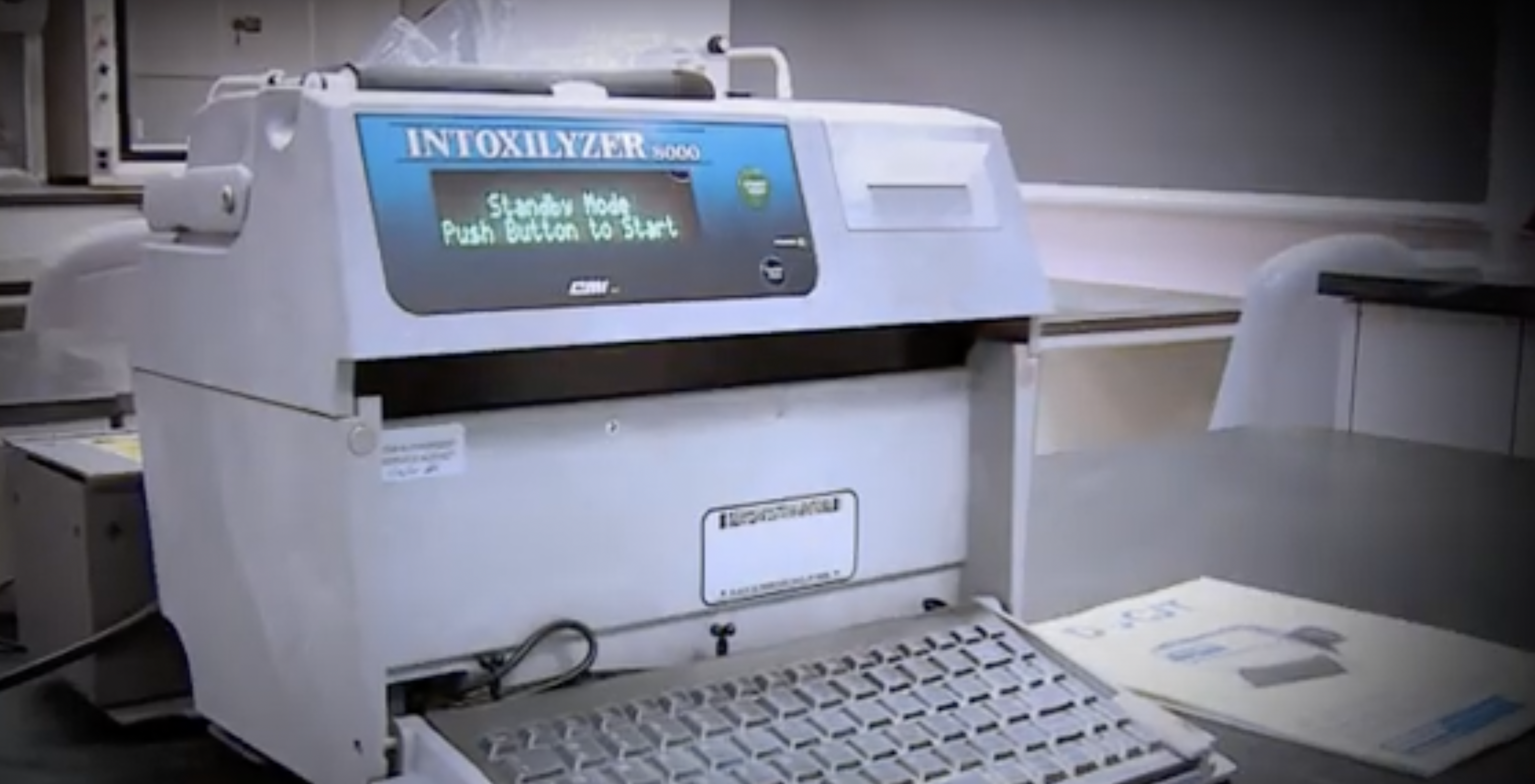
Juries understand pretty quickly while Florida’s Intoxilyzer 8000 looks like a piece of junk you would have seen at a garage sale in 2006. By the time it came online, it was already outdated. Florida’s been using those same machine since 2006 – more than twenty years. Would you believe each one cost around $9,000?
Florida is now in the process of moving to the Intoxilyzer 9000. You can expect an agency near you to start using it before the end of 2026. The cost of the Intozilyzer 9000 has barely kept up with inflation.
While the state will try to sell the Intoxilyzer 9000 as a modern upgrade, DUI defense attorneys can show why cheaper and easier-to-use isn’t always better. In fact, the Intoxilyzer 9000 suffers from the following vulnerabilities that good DUI defense attorneys can easily explain to a jury:
The Elimination of Wet Bath Solutions:
Under the 8000 curriculum, agency inspectors had to use wet bath simulators with liquid ethanol reference solutions across three target levels (0.05, 0.08, and 0.20 g/210L to mimic human physiology via Henry’s Law (liquid-to-vapor phase transition). Under the 9000 curriculum, FDLE scrapped wet bath calibrations entirely for monthly inspections, relying strictly on dry gas cylinders.
The state took the biology out of testing. Human breath originates from liquid blood in living lungs. Instead of testing whether the machine can properly measure alcohol vapors emerging from liquid solutions, the agency now only feeds the machine pre-mixed dry gas from a metal can.
The “Black Box” Modular Design with a Passive Operator:
The 8000 required inspectors to understand hardware diagnostics, printer mechanisms, and physical electrical fuses. The 9000 curriculum explicitly bars inspectors from ever disassembling or servicing internal components.
The Agency Inspector is not a scientist or a technician. Instead, they are trained to be a “button-pusher.” When pressed on internal optical drift, IRPCM issues, or sensor miscalculations, the inspector must admit they are forbidden from opening or looking inside the box and know nothing about its actual component failures.
The Narrowed “Outside Calibration Range” Ceiling:
The 8000 reported quantitative results up to 0.600 g/210L before flagging RANGE EXCEEDED. The 9000 caps its certified calibration range at 0.300 g/210L, throwing an OUTSIDE CALIBRATION RANGE flag for anything above it.
The state’s new machine loses verified accuracy at half the ceiling of the old model. DUI defense attorneys can highlight how tightly constrained the machine’s reliable analytical envelope actually is.
Loss of Diagnostic Granularity on Breath Delivery:
The 8000 distinctly reported whether an abnormal slope was due to a decreasing reading (SLOPE NOT MET) or an un-peaked, continually rising reading (SLOPE NOT LEVEL). The 9000 lumps multiple slope anomalies into a single generic SLOPE NOT MET code.
The 9000 obscures why a breath sample was flagged as improper, hiding whether the subject simply had irregular flow dynamics or if residual mouth alcohol was decaying.
The “Scripted Excuse”
Both curricula explicitly train inspectors to explain away inspection failures. Often, the inspectors call FDLE just to figure out the best excuse to use for a given problem. For example, the training material helps explain when to use the following excuses:
- blaming an out-of-range dry gas check on an unplugged cylinder; or
- blaming a failed interferent test on a depleted acetone bottle.
Knowing which excuse fits each problem helps the inspector avoid marking the machine “Does Not Comply.”
At trial, DUI defense attorneys will be able to walk the inspector through their course manual to show the jury that the state literally scripts their excuses during training. When an error occurs, they are trained to assume human error, repeat the test, and pass the machine.
Regulatory Administration of Florida’s Intoxilyzer 8000 and 9000
One way to understand the difference between Florida’s Intoxilyzer 8000 and Intoxilyzer 9000 is to look at the training curricula that center on course administration, calibration standards, hardware architecture, inspection workflows, and instrument status messages.
- Course Numbering and Non-Interchangeability:
- The Intoxilyzer 8000 is taught under Course Number 850, whereas the Intoxilyzer 9000 is taught under Course Number 853.
- The 9000 curriculum explicitly instructs that courses and permits for the 8000 and 9000 are not interchangeable.
- Permit Verification:
- The 8000 curriculum states that inspections cannot occur until a permit is formally issued.
- The 9000 curriculum adds that confirmation of permit issuance can be verified through the inspector’s Automated Training Management System (ATMS) training profile.
- Continuing Education Inactivity:
- The 9000 curriculum explicitly designates an unrenewed permit as “INACTIVE” during the 6-month grace period before expiration, language not formalized in the 8000 lesson plan.
- Department Inspection Mandates:
- The 9000 curriculum adds explicit instruction that Department Inspections are governed by, and must not exceed 12 months from the date of the last Department Inspection (with worked compliance date examples).
- Monthly Electronic Data Transmissions:
- The 9000 curriculum introduces a specific mandate that all breath tests must be electronically transmitted to FDLE at least once each calendar month.
- Form Numbering:
- Forms for the 9000 add an “a” suffix (e.g., Form 37a, 38a, 39a, 40a, 41a), whereas 8000 forms use standard numbering (Forms 37, 38, 39, 40).
Standards, Chemistry & Inspection Setup for Florida’s Intoxilyzers
| Feature / Requirement | Intoxilyzer 8000 Curriculum | Intoxilyzer 9000 Curriculum |
| Calibration Standards Used for Inspection |
Wet Bath Alcohol Reference Solutions (0.05, 0.08, an d0.20 g/210L and 0.08 g/210L using a Dry Gas Standard. |
Dry Gas Standards ONLY for target concentrations (0.05, 0.08, and 0.20 g/210L. |
| Liquid Alcohol Reference Solutions |
Extensively taught (Lesson 4), including 2-year shelf life, lot approvals, and headspace chemistry. |
Removed entirely from the curriculum. |
| Simulators Required |
Requires a minimum of two (2) properly operating simulators. |
Requires at least one (1) simulator (used only for alcohol-free and interferent tests). |
| Simulator Model Mentioned |
Generic reference sample devices. |
Specifically identifies and depicts the Guth 12V500 digital simulator. |
| Inspection Procedure Structure |
Taught as a 7-step process under Form 39. |
Taught under modernized sequence workflows for Form 39a. |
Hardware, Optics and Maintenance of Florida’s Intoxilyzer
- Optical Detectors and Filtration:
- Intoxilyzer 8000: Employs two (2) pyroelectric detectors and two filters (one for interferents and one for alcohol).
- Employs four (4) pyroelectric detectors, each paired to an optical filter for enhanced spectral analysis.
- User Interface and Peripherals:
- Intoxilyzer 8000: Operates via a 2-line 20-character fluorescent display, physical Start Test push pad, internal thermal printer (with external printer option), and keyboard.
- Intoxilyzer 9000: Features an interactive LED color touchscreen, 2D barcode scanner, magnetic stripe card reader, external printer only, and an adjustable base stand.
- Network and Data Communications:
- Intoxilyzer 8000: Uses an internal analog telephone modem (RJ-11 jack).
- Intoxilyzer 9000: Features Ethernet, USB ports, and configurable internal Network/VPN settings.
- Diagnostic Subsystems Checked:
- Intoxilyzer 8000: Real-Time Clock (RTC), Digital Signal Processor (DSP), Analytical Test, EEPROM, Volt/Current, RAM, Internal Modem, Temperature Regulation, and Internal Printer.
- Intoxilyzer 9000: RTC, Analytical File Integrity, IRPCM (Infrared Pre-Control Module), Voltage, Current, RAM and NAND Flash, RFI Output Board, Temperature Regulation, and Dry Gas Regulator Pressure Sensor Output.
- Inspector Maintenance Scope:
- Intoxilyzer 8000: Instructs inspectors on checking/replacing external circuit fuses, replacing internal thermal paper, and tightening gas bracket screws.
- Intoxilyzer 9000: Prohibits disassembly; removes internal fuse and paper maintenance (no internal printer).
- Menu Navigation and Security:
- Intoxilyzer 8000: Accessed via ESC, ESC; Operator menu accessed without password; single-letter command codes (E, D, G, S, I, R, C, T, Z).
- Intoxilyzer 9000: Accessed via onscreen OPTIONS button; requires both Permit Number and unique PIN across levels; graphical interface organized under Configuration, Utility, Diagnostics, DVMs, Print Utilities, and Control Testing.
Operational Status, Messages and Diagnostics
- Standby Recovery:
- On the 8000, waking from Standby requires pressing the Start Test button followed by a ~1-minute cycle. On the 9000, the user taps the touchscreen, triggering a ~2-minute countdown.
- High Concentration Flagging:
- Intoxilyzer 8000: Uses RANGE EXCEEDED when a sample exceeds 0.600 g/210L.
- Intoxilyzer 9000: Uses OUTSIDE CALIBRATION RANGE when a sample falls outside the calibration/inspection verification range of 0.020 – 0.300 g/210L.
- Slope Failure Messages:
- The 8000 curriculum teaches both SLOPE NOT MET (negative slope) and SLOPE NOT LEVEL (un-peaked/rising slope).
- The 9000 streamlines this instruction strictly to SLOPE NOT MET.
- Message Terminology Variations:
- The 8000 curriculum lists INTERFERENT DETECT, whereas the 9000 uses INTERFERENT DETECTED.
- Test Abort / Refusal Actions:
- On the 8000, aborts/refusals occur via keyboard commands (“R” key or Start button).
- On the 9000, the operator double-taps onscreen “Refused” or “Abort” buttons.
- Disabled Mode Triggers:
- The 8000 locks out if an inspection is not uploaded within 5 days or if 150 breath tests accumulate.
- The 9000 locks into Disabled Mode if an Agency Inspection or Department Inspection is past due, if an inspection upload is pending past 5 days, or if the dry gas cylinder is expired or detached.
Read more about problems with Florida’s Intoxilyzer 9000.
This article was last updated on Thursday, August 27, 2026.