




Cash Seized at a Florida Airport? Why Filing a CBP Petition Feels like a Trap
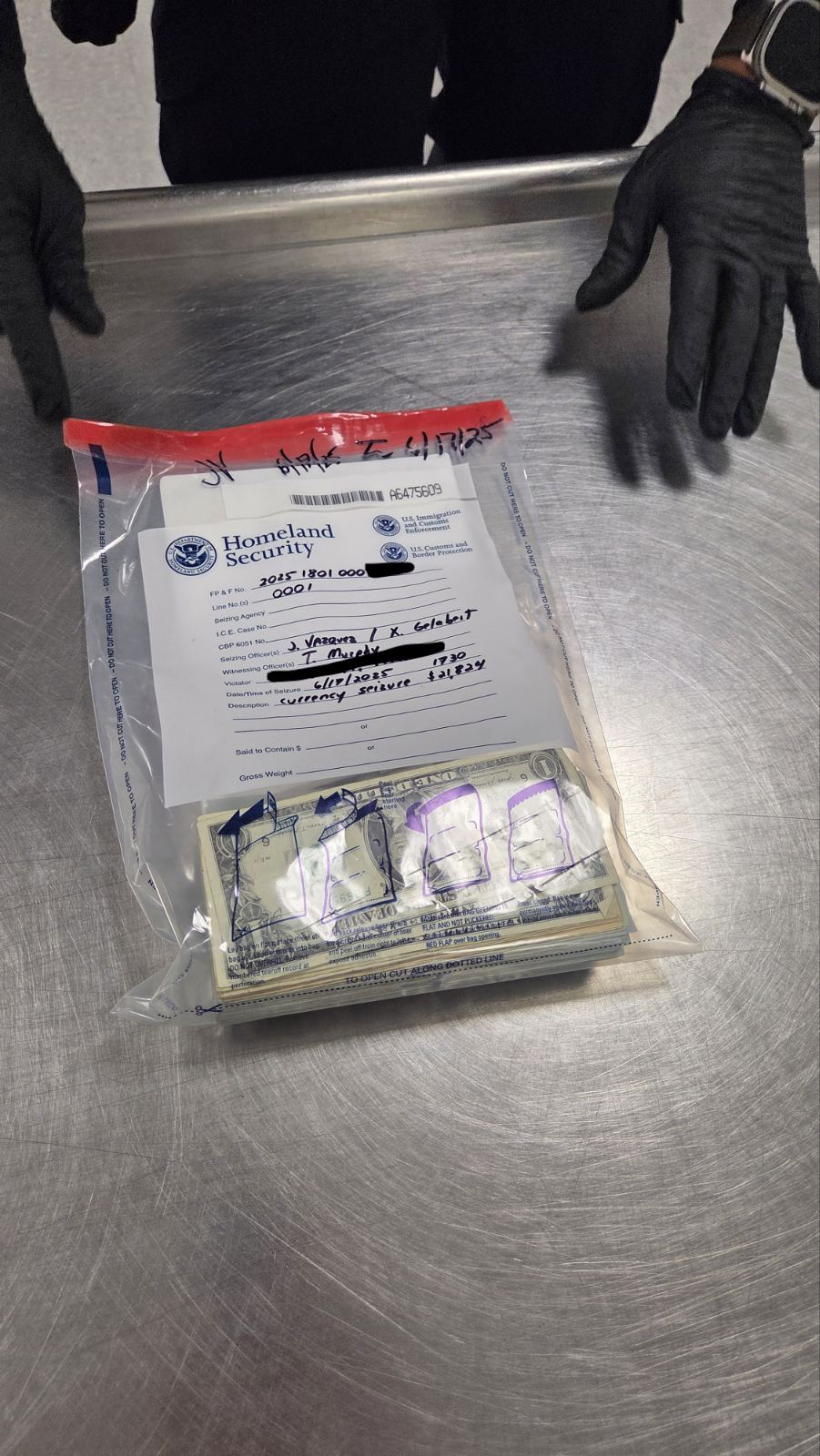
If you were recently traveling through a major Florida airport hub—whether flying out of Miami International (MIA), catching a domestic flight at Orlando International (MCO), or landing at Fort Lauderdale-Hollywood International (FLL)—and were pulled out of line by federal agents, you are likely in a state of shock.
You weren’t arrested. You weren’t handcuffed. Instead, federal officers took you to a back room, counted your currency, confiscated every dollar, and sent you on your way with nothing but a single sheet of paper: CBP Form 6051S (Custody Receipt for Seized Property and Evidence).
The agents may have told you, “Just wait for the letter in the mail and file a petition to get it back.”
Do not take legal advice from the agency that just confiscated your property. Forcing your case into the administrative “Petition” track is exactly what the government wants you to do, and it is the fastest way to ensure your money remains locked in a federal vault for a year or more. For most people who file a petition, they will eventually receive a form letter explaining that the government is keeping the cash and there are no longer any other option to get it back.
Here is what is actually happening behind the scenes at Florida airports, and the best and most aggressive litigation strategy required to get your cash back quickly.
The Shift in Florida Airport Seizures: CBP & HSI
For years, domestic airport interdictions were heavily driven by DEA task forces targeting domestic travelers. Following recent structural scale-backs of those domestic airport programs, the enforcement footprint in Florida has heavily shifted.
Today, the vast majority of aggressive cash seizures at Florida terminals are executed by Customs and Border Protection (CBP) and Homeland Security Investigations (HSI). These federal task forces heavily target two specific scenarios:
- Outbound International Flight Reporting Violations: Under 31 U.S.C. § 5316, it is perfectly legal to fly out of the United States with any amount of currency—but if it is $10,000 or more, you must declare it on a FinCEN Form 105. CBP officers routinely intercept travelers at the gate for international flights leaving MIA or FLL, asking them how much cash they are carrying. An incorrect answer, or a failure to file the form before boarding, results in an immediate, mandatory seizure of the entire amount.
- Domestic “Bulk Cash Smuggling” Inferences: Task force officers still patrol domestic terminals at MCO, FLL, and MIA. They rely on profiling, canine alerts on luggage, and luggage x-ray anomalies to claim that carrying cash on a domestic flight is circumstantial evidence of a drug nexus or unstructured banking, even when no criminal charges are filed.
The Trap: Filing an Administrative Petition for Remission
Within 60 days of the airport seizure, you will receive a formal Notice of Seizure and Election of Proceedings from the local Fines, Penalties, and Forfeitures (FP&F) office handling the port of seizure (such as the Miami FP&F Field Office or the Tampa/Orlando FP&F branch).
The government gives you three choices:
- do nothing so the government can forever keep your property without a fight;
- file an Administrative Petition for Remission or Mitigation so the agency that took your property can decide; or
- file a Verified Claim requesting immediate court action which is the ONLY way to contest the legality of the seizure.
The Notice makes the “Petition” sound simple, cheap, and safe. It is a trap. Here is why:
- You Waive Your Due Process Timelines: When you file a petition, you hand the case over to the same agency that seized it. You effectively waive the strict statutory deadlines that require the government to move your case forward.
- The Bureaucratic Black Hole: An administrative petition is reviewed by an internal agency paralegal or adjudicator. They have no incentive to move quickly. It is common for a petition to sit unresolved for 10 to 14 months, only to result in a standard form-letter denial or an offer to give you back a tiny fraction of your money in exchange for signing away your right to sue.
- You Hand Them Your Evidence Early: To win a petition, you must completely document the legitimate source and purpose of the cash. Filing this without an experienced attorney frequently results in providing statements that the government will later distort to justify keeping the money.
The Solution: Bypass the Bureaucracy with a Verified Claim
If you want your money back swiftly, you must take the fight out of the agency’s hands and place it in front of a federal judge. This is accomplished by skipping the petition entirely and filing a legally precise Verified Claim for Court Action.
When an experienced asset forfeiture attorney files an immediate Verified Claim, it triggers a powerful statutory clock under CAFRA (the Civil Asset Forfeiture Reform Act):
- The 90-Day Deadline: Once the government receives your Verified Claim, the U.S. Attorney’s Office has exactly 90 days to either return your cash in full or file a formal Civil Asset Forfeiture Complaint in U.S. District Court.
- The Prosecutor’s Risk Assessment: Assistant United States Attorneys (AUSAs) are busy federal prosecutors. When they receive a case from CBP or HSI where the traveler has hired an aggressive forfeiture lawyer, they look at the evidence objectively. If the seizure relies primarily on weak indicators—like a circumstantial dog sniff or an innocent failure to file a [FinCEN Form 105]—the prosecutor knows they risk losing at trial and being forced to pay your attorney fees.
- The Hold Harmless Agreement: In a significant number of cases, rather than trying to litigate a weak civil case in federal court under strict deadlines, the U.S. Attorney will agree to a complete or near-complete release of the funds via a standard Hold Harmless Agreement before a lawsuit is ever formally filed.
Securing the Evidence: The Airport Surveillance Demand
One of the most critical steps an experienced defense firm takes immediately after an airport seizure is issuing an emergency Preservation Demand to the local aviation authority (such as the Miami-Dade Aviation Department or the Broward County Aviation Department).
Airport security cameras capture the entire interaction. This video footage is vital to proving:
- Whether agents unlawfully detained you without reasonable suspicion before you reached the gate.
- Whether your consent to a bag search was coerced or forced.
- The exact length and nature of your interrogation in the back terminal room.
If the video shows federal agents violated your Fourth Amendment rights, a federal court can suppress the seizure entirely, forcing an immediate return of your property.
Protect Your Asset Recovery Options
If CBP, HSI, or local airport interdiction detectives seized your currency at a Florida airport terminal, do not wait for the government’s 60-day notice letter to arrive in the mail, and do not attempt to navigate the complex administrative rules alone.
At Sammis Law Firm, we focus on challenging arbitrary government tracing heuristics, protecting travelers’ constitutional rights, and aggressively forcing the return of seized cash from federal agencies.
Learn More About Your Specific Port of Seizure:
- Read our comprehensive guide on: Whether TSA Can Seize Your Cash at Airport Security Checkpoints.
- Understand the strict reporting guidelines for international travelers under FinCEN Form 105 and Currency Reporting Laws.
- Learn about your rights under federal law via a Rule 41(g) Motion for Return of Property.
- Understand how we aggressively counter federal agency actions on our dedicated page for Fighting ICE and CBP Forfeiture Actions.
Contact a civil asset forfeiture attorney at Sammis Law Firm.
Call 813-250-0500 to speak with us about an asset forfeiture attorney today and protect your life savings or business capital.