



Fake Bail Bond Scams Are on the Rise in Florida
By Joshua Monteiro
Criminal Defense Attorney and Partner, Sammis Law Firm
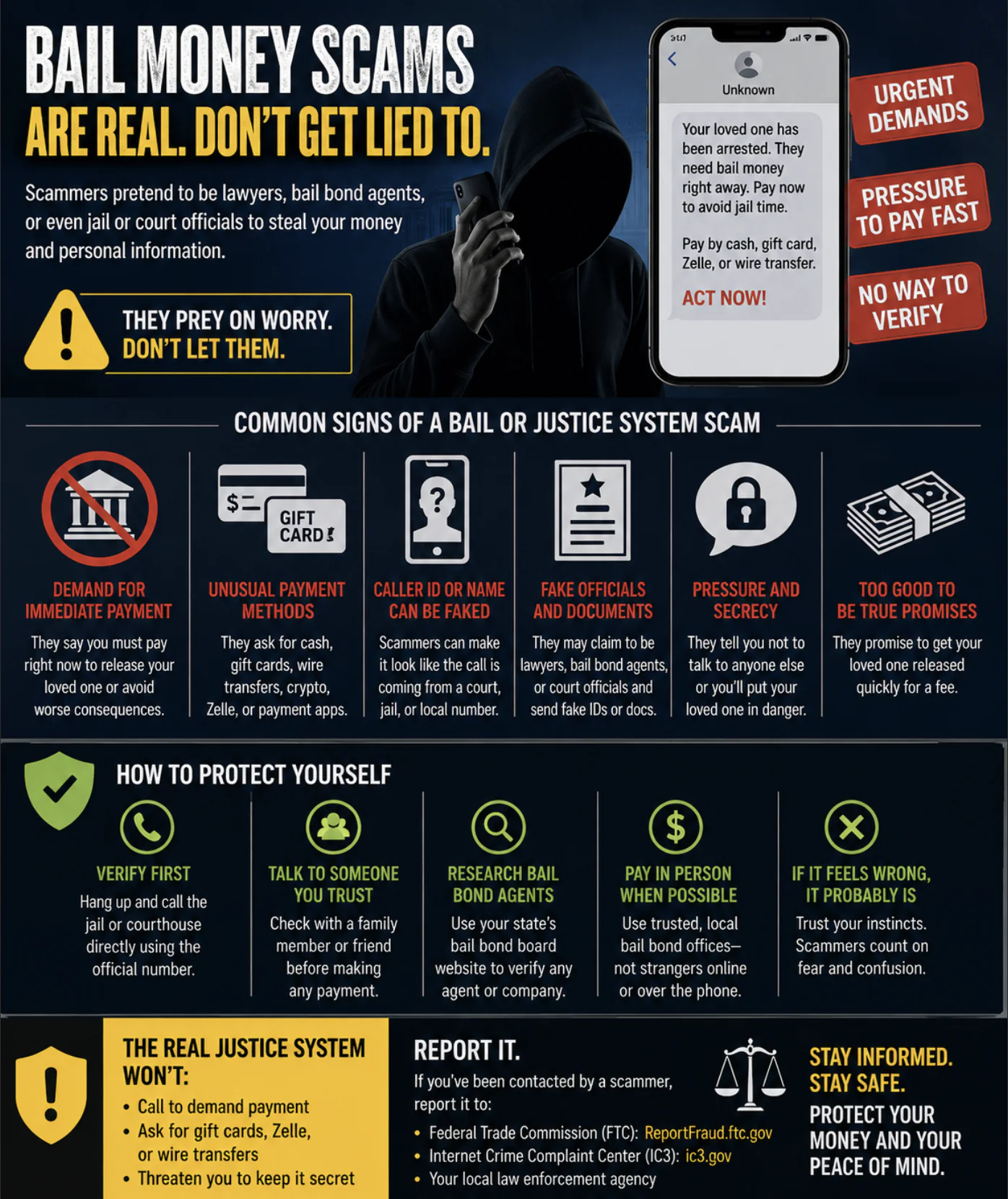
Over the last several months, we have seen an increase in sophisticated scams involving people pretending to be bail bondsmen, law enforcement officers, or jail personnel. These scams are designed to create panic and pressure families into sending money immediately before they have time to verify whether a loved one was actually arrested.
As a criminal defense attorney, I wanted to address this because these scams are becoming incredibly convincing. Many of them involve spoofed police department phone numbers, detailed personal information, and stories designed to make victims react emotionally before they stop and think.
In some situations, scammers are even calling workplaces pretending an employee has been arrested and needs bond money immediately. They often ask to speak with a manager or coworker and create believable stories involving DUI arrests, warrants, or missed court appearances.
The goal is simple: create fear, confusion, and urgency before the victim has time to independently verify the information.
How Fake Bail Bond Scams Work
Most fake bail bond scams follow a similar pattern. A scammer calls claiming that a loved one has been arrested or detained. They may pretend to be:
- a bail bondsman
- a police officer
- a jail employee
- a court representative
- an attorney
- the defendant
The caller then pressures the victim to send money immediately to secure release from jail or avoid additional legal consequences. The payment methods are almost always major warning signs. Scammers commonly demand payment through:
- Cash App
- Venmo
- Zelle
- cryptocurrency
- wire transfers
- prepaid debit cards
- gift cards
Legitimate law enforcement agencies do not demand payment through these methods. Real courts do not ask for bond money through gift cards or cryptocurrency. And legitimate bail bond companies operate through licensed offices with contracts, paperwork, and verifiable business information.
Why These Scams Are Becoming More Common
One of the biggest problems is that scammers now have access to more personal information than ever before. Many victims report that callers already knew:
- where they worked
- family members’ names
- home addresses
- partial Social Security numbers
- vehicle information
- details pulled from social media
That information makes the scam sound believable. In some situations, scammers may even use AI-generated voice technology to imitate a loved one’s voice. A parent may receive a frantic call that sounds like their child claiming they were arrested and need help immediately. Fear and panic are exactly what these scammers rely on.
Can Police Officers Call Asking for Money?
No. Law enforcement agencies do not call demanding immediate payment to avoid arrest or release someone from jail. If someone claiming to be law enforcement asks you to send money immediately, especially through a mobile payment app or gift cards, that should immediately raise concerns. Similarly, courts do not call demanding payment to avoid warrants or contempt charges.
If you receive one of these calls, slow down and independently verify the information before doing anything else.
What You Should Do if You Receive One of These Calls
If someone calls claiming a loved one has been arrested:
- Do not give any information over the phone.
- Independently contact the jail or law enforcement agency using an official number you locate yourself online.
- Attempt to contact the family member directly.
- Do not rely on caller ID. Phone numbers can be spoofed to appear as legitimate police departments or government offices.
- Never send money through gift cards, cryptocurrency, or peer-to-peer payment apps without verifying the situation.
- If the caller is claiming to be a bail bondsman, verify that the company is licensed and operating from a legitimate office.
In many situations, taking five minutes to slow down and verify the information is enough to prevent becoming a victim.
How Legitimate Bail Bond Companies Actually Operate
In Florida, legitimate bail bond companies are licensed businesses that work through formal procedures. Typically, a bail bond process involves:
- verifying the arrest information
- confirming the bond amount
- signing contracts and indemnity paperwork
- discussing collateral requirements if necessary
- meeting in person or through verified office procedures
It is not a process that happens through rushed phone calls demanding immediate payment through Cash App. If someone is attempting to pressure you into secrecy or urgency, that is usually a major warning sign.
Why This Matters
These scams are becoming more sophisticated because they target people during moments of fear and confusion. As attorneys, we often speak with families during some of the most stressful moments of their lives. Scammers understand that panic can override caution, especially when someone believes a loved one has been arrested or is sitting in jail.
Unfortunately, by the time many victims realize what happened, the money is already gone.
If you receive a call claiming someone has been arrested and immediate payment is required, stop and verify everything independently before sending money. Scammers are relying on panic.
The more informed the public becomes about these tactics, the harder it becomes for these scams to succeed.
At Sammis Law Firm, we believe part of serving the community is helping people understand not only the criminal justice system, but also the increasingly sophisticated scams that exploit fear surrounding arrests and legal situations.
If you or a loved one have questions about a real arrest situation in Florida, it is important to speak with a legitimate attorney or licensed bail professional directly before making any decisions.