



Drug Crimes in Orange County, FL
Drug crimes in Orange County, FL, carry severe criminal penalties under Florida law, ranging from first-degree misdemeanors for simple paraphernalia possession to first-degree felony charges carrying mandatory minimum prison terms for high-volume narcotics trafficking.
Cases originating in Orange County are investigated by municipal police departments—such as the Orlando Police Department, Winter Park Police Department, and Apopka Police Department—the Orange County Sheriff’s Office (OCSO), and multi-agency task forces like the Metropolitan Bureau of Investigation (MBI).
Once an arrest is made, the Office of the State Attorney for the Ninth Judicial Circuit evaluates the evidence to determine formal charging decisions.
While prosecutors maintain specialized units to target high-level drug trafficking organizations and repeat offenders, the Ninth Judicial Circuit also provides formal diversion programs and problem-solving court alternatives for qualifying individuals struggling with substance addiction.
Understanding whether your charge qualifies for pre-trial dismissal through a diversion track—or whether an aggressive defense must be mounted to challenge unconstitutional searches, unlawful traffic stops, or lack of constructive possession—is critical to protecting your freedom and criminal record.
Attorney for Drug Crimes in Orange County, FL
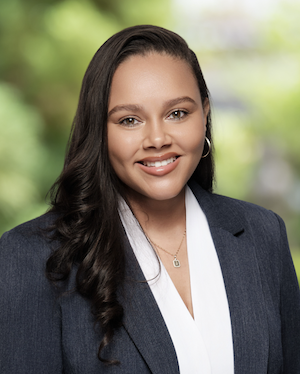
If you were arrested in Orange County, FL, then contact attorney Jocelyn Dopson-Rodriguez at Sammis Law Firm. Our office is conveniently located at 1950 Lee Rd, Suite 208, Winter Park, FL 32789, near the Winter Park Branch Courthouse.
We provide a free consultation to discuss the criminal charge pending against you and the best defenses. We understand the standard operating procedures of local law enforcement agencies in Orange County, FL.
Let us put our experience to work for you.
Call (407) 598-9011 today.
Florida’s Classification of Controlled Substances
Section 893.03, F.S., classifies controlled substances into five categories or classifications, known as schedules. The schedules regulate the manufacture, distribution, preparation, and dispensing of substances listed in the schedules.
The most important factors in determining which schedule may apply to a substance are the “potential for abuse” of the substance and whether there is a currently accepted medical use for the substance.
Section 893.035(3)(a), F.S., defines “potential for abuse” as a substance that has properties as a central nervous system stimulant or depressant or a hallucinogen that create a substantial likelihood of the substance being:
- used in amounts that create a hazard to the user’s health or the safety of the community;
- diverted from legal channels and distributed through illegal channels; or
- taken on the user’s own initiative rather than on the basis of professional medical advice.
The controlled substance schedules are described as follows:
- Schedule I substances (s. 893.03(1), F.S.) have a high potential for abuse and no currently accepted medical use in treatment in the United States. Use of these substances under medical supervision does not meet accepted safety standards.
- Schedule II substances (s. 893.03(2), F.S.) have a high potential for abuse and a currently accepted but severely restricted medical use in treatment in the United States. Abuse of these substances may lead to severe psychological or physical dependence.
- Schedule III substances (s. 893.03(3), F.S.) have a potential for abuse less than the Schedule I and Schedule II substances and a currently accepted medical use in treatment in the United States. Abuse of these substances may lead to moderate or low physical dependence or high psychological dependence. Abuse of anabolic steroids may lead to physical damage.
- Schedule IV substances (s. 893.03(4), F.S.) have a low potential for abuse relative to Schedule III substances and a currently accepted medical use in treatment in the United States. Abuse of these substances may lead to limited physical or psychological dependence relative to Schedule III substances.
- Schedule V substances (s. 893.03(5), F.S.) have a low potential for abuse relative to Schedule IV substances and a currently accepted medical use in treatment in the United States. Abuse of these substances may lead to limited physical or psychological dependence relative to Schedule IV substances.
Controlled Substance Analog Defined under Florida Law
A “controlled substance analog” is defined in s. 893.0356(2)(a), F.S., as a substance which, due to its chemical structure and potential for abuse, meets the following criteria:
- The substance is substantially similar to that of a controlled substance listed in Schedule I or Schedule II of s. 893.03, F.S.; and
- The substance has a stimulant, depressant, or hallucinogenic effect on the central nervous system or is represented or intended to have a stimulant, depressant, or hallucinogenic effect on the central nervous system substantially similar to or greater than that of a controlled substance listed in Schedule I or Schedule II of s. 893.03, F.S.
Specialized Narcotics Prosecution in the Ninth Judicial Circuit
In the Ninth Judicial Circuit—serving Orange and Osceola counties—the State Attorney’s Office maintains a dedicated Narcotics Unit. This unit concentrates on the investigation and targeted prosecution of high-level narcotics trafficking organizations, particularly those responsible for introducing fentanyl and illicit opioid analogs into the community.
Working in partnership with multi-jurisdictional task forces such as the Metropolitan Bureau of Investigation (MBI), prosecutors focus rigorous resources on commercial distribution networks and major distribution rings while evaluating alternatives to incarceration for non-violent individuals who commit offenses driven primarily by chemical dependency.
Law enforcement agencies in Orange County, FL, focus on stopping the most serious drug crimes for trafficking in:
- Fentanyl – A powerful synthetic opioid that is similar to morphine but is 50 to 100 times more potent. This prescription drug is also made illegally and sold on the street. Fentanyl is classified as a Schedule (2)(b) controlled substance as explained in Section 893.03(2)(b)9., F.S.
- Xylazine – A Schedule I drug that is FDA approved for use in animals as a sedative and pain reliever. The authorities have deemed it not safe for use in humans. In drug trafficking cases, the prosecutor will often argue that xylazine was added to illicit opioids, including fentanyl, to lengthen its euphoric effects.
Diversion Programs for Drug-Related Offenses
For individuals facing select non-violent drug charges or drug-motivated offenses, the State Attorney’s Office for the Ninth Judicial Circuit utilizes risk-assessment analyses to offer pre-trial diversion alternatives that allow participants to avoid a formal conviction.
Possession of Drug Paraphernalia: Adult Civil Citation Program (ACCP)
Defendants facing charges for Possession of Drug Paraphernalia under Section 893.147, F.S., may be evaluated for the Adult Civil Citation Program (ACCP). Most non-violent misdemeanors with no aggravating factors and no requirement to pay restitution are eligible.
Diversion-eligible defendants approved for the ACCP track must fulfill several requirements:
- Waive speedy trial;
- Complete an approved substance abuse education course;
- Attend six (6) Narcotics Anonymous (NA) meetings;
- Pay course fees, if applicable; and
- Pay the required program fee:
- Criminal Traffic: $100
- Misdemeanor: $150
- Felony: $200
Drug-Related Theft and Burglary: Early Resolution Diversion (ERD)
When property offenses such as theft or burglary are linked to underlying substance abuse, defendants may qualify for the Early Resolution Diversion (ERD) program. ERD is available to eligible individuals charged with non-violent misdemeanors and third-degree felonies without aggravating factors or restitution requirements. Eligibility applies from the time of arrest or citation up until the first pretrial conference.
Defendants approved for ERD are required to:
- Waive speedy trial;
- Complete a substance abuse course;
- Complete an anti-theft course;
- Complete a financial literacy course;
- Attend six (6) Narcotics Anonymous (NA) meetings;
- Complete vocational education programming;
- Perform 30 community service hours;
- Pay course fees (if applicable); and
- Pay a $100 program fee.
Upon successful completion of all diversion requirements within the established timeframe, the State will file a formal dismissal (nolle prosequi) of the underlying criminal charges.
Adult Drug Court in Orange County, FL
The Ninth Judicial Circuit participates in the Adult Drug Court program, a specialized Problem-Solving Court administered by the Ninth Judicial Circuit Court of Florida. Drug Court provides a court-supervised treatment framework designed to reduce recidivism and address the root causes of criminal behavior when offenses are driven by severe addiction.
Participants in Adult Drug Court are assessed for serious substance dependence and follow an individualized, multi-phase treatment protocol. Key components of the program include:
- Frequent, random drug and alcohol screenings;
- Individual and group substance abuse counseling;
- Regular status hearings before the presiding Drug Court judge to review compliance; and
- Assistance with vocational training, employment placement, and transitional housing to support long-term self-sufficiency.
Admission into the program requires a formal referral submitted directly to the Ninth Judicial Circuit Court Problem Solving Court office. Successful completion of the Drug Court program allows participants to resolve their pending criminal charges while receiving structured clinical support.
This article was last updated on Monday, August 17, 2026.