



Juvenile Defense in Orange County, FL
When a child is arrested, parents are often left trying to understand an unfamiliar court system while making decisions that can affect their child’s immediate freedom—and potentially their future.
Juvenile delinquency cases are different from adult criminal cases. The process moves quickly, detention decisions can happen within hours, and the consequences of a delinquency case can extend well beyond the immediate court case.
If your child has been arrested in Florida’s Ninth Judicial Circuit in Orange County or Osceola County, or elsewhere in Central Florida, having an attorney who understands the juvenile system and the local courts can make an important difference.
The Ninth Judicial Circuit serves both Orange and Osceola Counties and handles juvenile delinquency matters in both counties. Juvenile cases in Orange County are handled at the Thomas S. Kirk Justice Center (also known as the “Orange County Juvenile Justice Center”) at 2000 E. Michigan St., Orlando, FL 32806.
Unlike most adult criminal proceedings, which are generally heard at the Orange County Courthouse in downtown Orlando, juvenile delinquency proceedings are conducted at this separate juvenile justice facility.
Attorney for Juvenile Defense in Orange County, FL
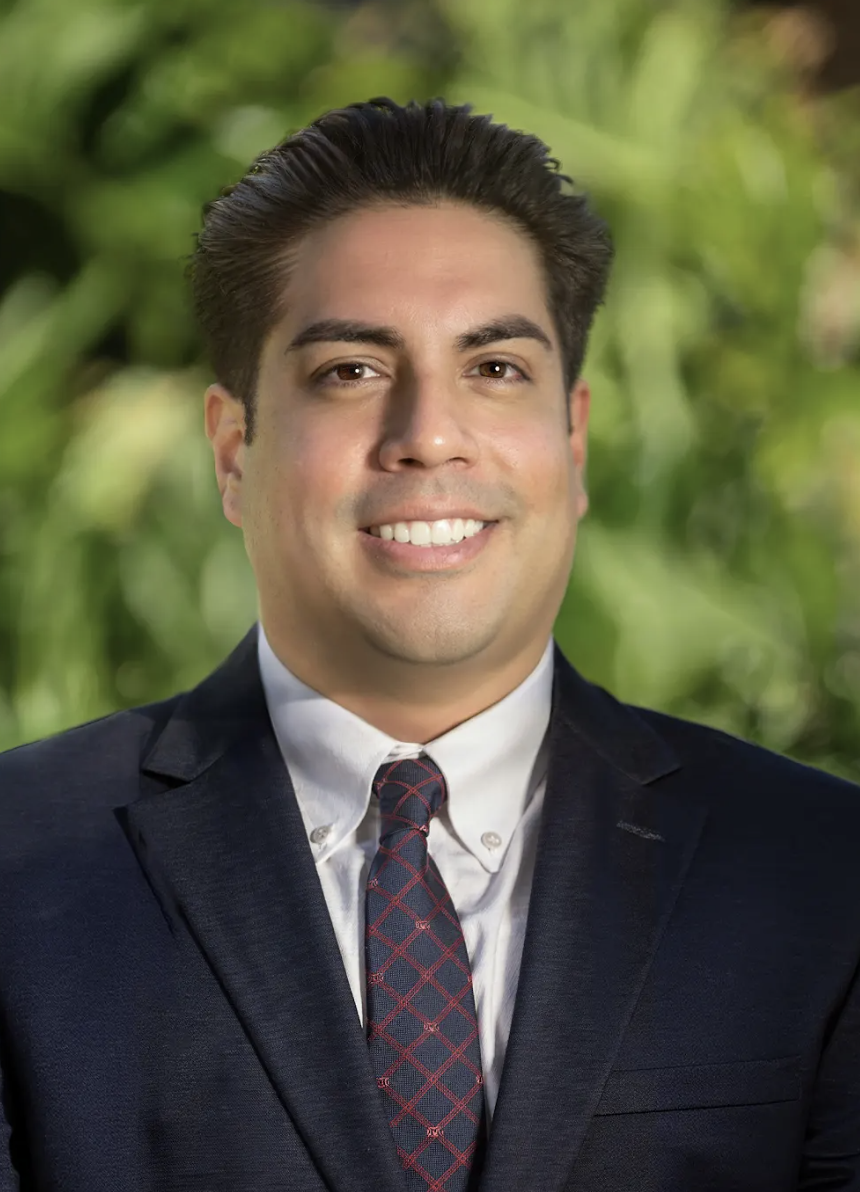
If your child was arrested or detained for a delinquent act, either a felony or misdemeanor, contact attorney Jocelyn Dopson-Rodriguez at Sammis Law Firm. Our office is conveniently located nearby at 1950 Lee Rd, Suite 208, Winter Park, FL 32789.
We represent juveniles at the Orange County Juvenile Justice Center at all stages of the case from the initial detention hearing, arraignment, pre-trial conferences, through the adjudicatory hearing.
When you call for a free consultation, you can talk with the attorney about the accusations and the best way to find the case.
Call 407-598-9011.
What Happens After a Juvenile Is Arrested in Orange County, FL?
Because juvenile cases can move quickly, families should understand what happens from the moment a child is taken into custody. This article explains each of the different steps of a juvenile court proceeding in Orlando and Orange County, FL.
Step 1: Your Child Is Taken Into Custody
After a juvenile is taken into custody by law enforcement for an alleged delinquent act, the juvenile might be released at the scene to a parent or guardian. If the juvenile is not released at the scene, the juvenile might enter the juvenile justice system for intake, assessment, and a detention determination.
After the detention, the juvenile might be taken to the Orange County Juvenile Assessment Center (JAC) located at 823 W. Central Blvd., Orlando, FL 32805. The JAC Program serves juveniles throughout Orange County, FL. From this centralized processing center, the juvenile undergoes the initial assessment which includes the following:
- detainable and non-detainable screenings; and
- screens for health, mental health, substance abuse, physical abuse and suicide prevention.
Unlike an adult criminal case, the initial question is not simply whether a judge will set a monetary bond. Juvenile detention decisions involve a separate process designed specifically for children.
One of the most important components is the Detention Risk Assessment Instrument (DRAI). The DRAI evaluates information concerning the child’s circumstances, the allegations, prior history, and other factors relevant to detention. The resulting assessment can play an important role in determining whether a child is released, placed on home detention or another less restrictive form of supervision, or held in secure detention.
Parents sometimes assume that the DRAI is simply a score that cannot be challenged. For the juvenile defense attorneys at Sammis Law Firm, we approach it differently. We examine the information being used to make the detention decision and look for circumstances that may have been overlooked, misunderstood, or inaccurately presented.
After reviewing the DRAI carefully, we might present information to the prosecutor, probation officer, or court about the following:
- The child’s home and family circumstances;
- School attendance and performance;
- Available parental supervision;
- Mental-health or substance-use concerns;
- Prior juvenile history;
- The actual circumstances surrounding the alleged offense;
- Whether the child presents a meaningful risk of failing to appear; and
- Other mitigating circumstances supporting release or a less restrictive placement.
The first goal is often to get the child home safely and appropriately while the case is pending.
If the child is ordered to remain in secure detention, the child might be moved to the Orange Regional Juvenile Detention Center located at 2800 S Bumby Avenue
Orlando, FL 32806. Visitation days at the facility for parents and guardians are set for:
- Wednesday 7:00 p.m. – 8:00 p.m.
- Saturday Modules B1 and G1- 12:00p.m. – 1:00 p.m.
- Modules B2 and B3 – 2:00 p.m. – 3:00 p.m.
Visitation hours are subject to change during holidays.
Step 2: The Detention Hearing in Juvenile Court
If a child remains detained, the case moves quickly. A child generally must be brought before the court for a detention hearing within 24 hours. At that hearing, the court considers whether continued detention is appropriate and what level of supervision or detention is warranted.
For families in Orlando, Orange County, and throughout the Ninth Circuit, that means the first court appearance may happen very soon after the arrest.
Our juvenile defense attorneys understand why involvement matters. We can begin gathering information immediately rather than waiting until the case is already moving through the court system.
Step 3: Understanding the 21-Day Detention Period
Juvenile detention is governed by specific statutory time limitations. Generally, Florida law limits how long a child may remain in secure detention under a special detention order, subject to statutory exceptions and extensions. That means the defense must pay attention to the detention timeline from the beginning of the case.
Every day matters when a child is sitting in detention. Our attorneys monitor the case, evaluate the statutory detention requirements, and advocate for the child’s release whenever appropriate.
Step 4: Arraignment in Juvenile Court in Orlando, FL
If the State Attorney’s Office files a delinquency petition, the case proceeds through juvenile court at the courthouse in Orlando, FL. At arraignment, the child is formally advised of the allegations and enters a plea. But arraignment should not be viewed as simply another appearance on the calendar.
Before deciding how to resolve the case, we evaluate the allegations, evidence, potential defenses, and available alternatives. Depending on the circumstances, that may include:
- Investigating the allegations;
- Reviewing discovery;
- Identifying witnesses;
- Evaluating police conduct;
- Reviewing statements made by the child;
- Examining potential search-and-seizure issues;
- Exploring diversion;
- Negotiating with the State Attorney’s Office; and
- Preparing the case for an adjudicatory hearing if necessary.
Step 5: Diversion May Be an Option
Not every juvenile case needs to proceed through a traditional delinquency prosecution. Depending on the child’s age, history, allegations, and circumstances, diversion may be available.
The Ninth Judicial Circuit has juvenile programs that include options such as Teen Court and other juvenile diversion programs. In Teen Court, for example, successful completion of the program can result in dismissal of the original charge.
Diversion can provide accountability without unnecessarily pushing a child deeper into the juvenile justice system. But diversion is not appropriate for every case. The juvenile defense attorneys at Sammis Law Firm can evaluate whether a diversionary resolution actually serves the child’s best interests before recommending it to our client and their family.
Step 6: Preparing the Juvenile’s Defense
If the case cannot be resolved through diversion or an appropriate negotiated resolution, we prepare the case for an adjudicatory hearing. At the adjudicatory hearing, the juvenile defense attorney must pay careful attention to both the law and the child’s individual circumstances. We may investigate:
- Police Conduct
- Whether the child lawfully stopped, detained, searched, or arrested
- Whether the child gave incriminating statements before or after the reading of the Miranda Warnings
- Whether the parents were properly notified before Miranda was read
- Whether the child gave a knowing and voluntary waiver of their right to remain silent and to have the assistance of counsel
- Was the child searched?
- Did the search occur at school?
- What do the witnesses actually say?
- Are there surveillance videos, photographs, 911 calls, CAD records, text messages, social media posts, or other evidence that changes the picture?
- What was happening in the child’s life at the time of the alleged offense?
- Can the defense present mitigation on the child’s age, maturity, peer influence, family circumstances, school performance, mental health, substance use, and other factors that might be important for negotiations with the State.
When determining whether the child’s waiver of their Miranda rights was knowing and voluntary, Florida courts consider the child’s age, experience, intelligence, background, the circumstances surrounding the questioning, and other factors when evaluating juvenile statements.
Step 7: What Is an Adjudicatory Hearing in Juvenile Court in Orlando, FL?
In adult court in Orlando, FL, the equivalent proceeding is generally called a trial. In juvenile court, it is called an adjudicatory hearing.
At the adjudicatory hearing, the prosecutor with the State Attorney’s Office must prove the allegations beyond a reasonable doubt. Evidence is presented, witnesses may testify, and the defense has the opportunity to challenge the State’s case and present a defense. In juvenile delinquency cases, the judge serves as the finder of fact instead of a jury.
An adjudicatory hearing should never be treated as something that begins on the morning of court. The preparation happens long before the hearing date.
Step 8: What Happens After an Adjudicatory Hearing?
If the court finds the allegations proven or if the child enters an admission to any of the allegations in the petition, the case moves to disposition. The juvenile court may consider a range of consequences and rehabilitative services, including:
- Probation;
- Counseling;
- Substance-abuse treatment;
- Mental-health services;
- Educational requirements;
- Community service;
- Restitution; and
- Commitment to the Department of Juvenile Justice.
The appropriate outcome depends on the individual child and the circumstances of the case.
Our goal is not simply to minimize punishment. Our goal is to protect the child’s future while helping the court understand the child as a whole person—not simply the allegations in a petition.
Why Local Juvenile Court Experience Matters
Juvenile defense is not simply a smaller version of adult criminal defense. The juvenile system has its own rules, procedures, detention requirements, diversion programs, terminology, and disposition options. And the process is local.
The Ninth Judicial Circuit is one of Florida’s largest judicial circuits, serving more than two million people across Orange and Osceola Counties. A family dealing with a juvenile arrest may need immediate answers:
- Will my child come home?
- What does the DRAI score mean?
- Will my child be detained?
- How long can my child remain in detention?
- What happens at the detention hearing?
- What happens at arraignment?
- Can we pursue diversion?
- Will this affect my child’s future?
- What happens if the case goes to an adjudicatory hearing?
These questions should not wait until the next court date.
Juvenile Defense for Youth Throughout Orange County, FL
At Sammis Law Firm, we represent juveniles and their families throughout the Ninth Judicial Circuit, including Orange and Osceola Counties, as well as clients in surrounding Central Florida communities when appropriate.
We understand that a child’s arrest affects the entire family.
Our approach is to address the case from the beginning—evaluating detention, investigating the allegations, identifying diversion opportunities, developing mitigation, challenging unlawful evidence when appropriate, negotiating with the State, and preparing for an adjudicatory hearing when necessary.
We understand that a child is still developing, that circumstances matter, and that the goal should be to protect both the child’s rights and the child’s future.
If your child has been arrested, is being investigated, or is facing a juvenile delinquency petition in Orange County, Osceola County, or the surrounding Central Florida area, contact Sammis Law Firm as soon as possible. The earlier you have an advocate involved, the more opportunities there may be to protect your child’s future.
This article was last updated on Tuesday, September 15, 2026.