



How Much Cash Can You Take to the Airport?
The attorneys at Sammis Law Firm represent clients after their case is taken at the airport. After the seizure, most people are shocked to learn that federal agents can seize money this way. Our clients just want to fly with their cash for any variety of reasons including moving, planning to buy a car, helping a relative, or carrying business funds.
The first question they ask is usually the same: “How much cash can you legally take through the airport?”
The short answer is simple — as much as you want. Carrying large amounts of cash is perfectly legal in the United States. But as anyone who has gone through TSA with more than a few thousand dollars knows, legal doesn’t always mean easy. A large amount of cash can trigger questions, delays, and sometimes a seizure by law enforcement.
This article explains the rules for traveling with cash, why the government seizes money at airports, and what you can do to get it back if it happens to you.
If your money was already taken, read more about seizures of cash at the airport for forfeiture and how our attorneys fight to get it back.
No Law Limits How Much Cash You Can Carry on a Domestic Flight
If you are flying within the United States, there is no limit on the amount of cash you can bring. You are allowed to carry:
- $500
- $5,000
- $20,000
- $100,000 or more
There is no law criminalizing the possession or transportation of cash on a domestic flight. But airport security officers might not agree on how innocent that looks.
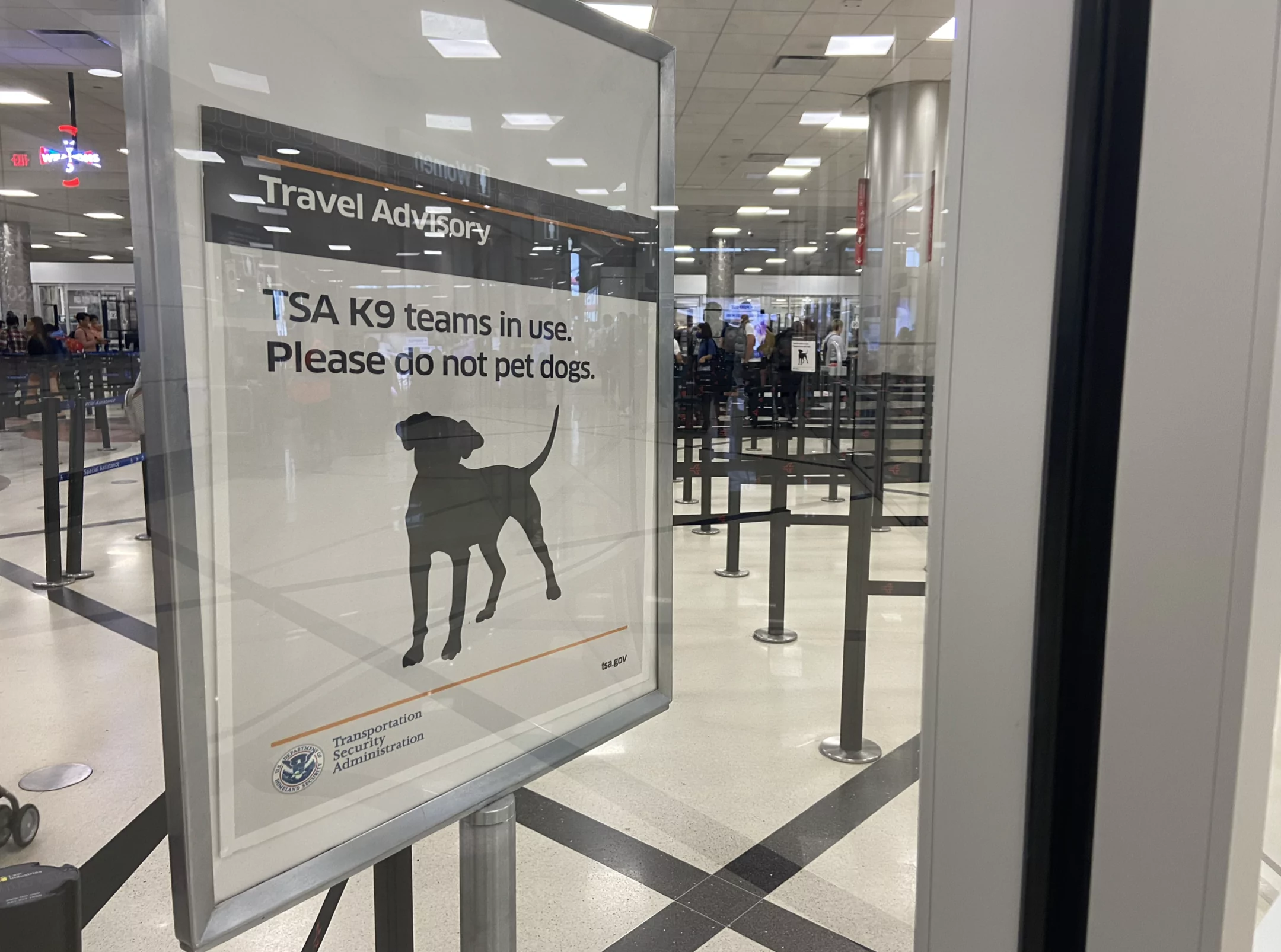
This suspicion often has nothing to do with you. Instead, it has everything to do with their training. TSA’s mission is security, not drug enforcement, but when they see a heavy stack of bills on the scanner, the next step is often calling the local task force officer, CBP, or the DEA.
To learn more about how these cases turn into federal civil asset forfeiture actions, visit our page on civil asset forfeiture cases in Florida and throughout the United States.
Flying Internationally? You Must Report More Than $10,000
The only time a legal “limit” comes into play is when you leave or enter the United States. If you are traveling internationally with more than $10,000 in currency or monetary instruments, you must file a FinCEN Form 105.
Failing to report it can lead to:
- seizure of the entire amount
- a civil penalty
- allegations that you were trying to conceal the funds
Even internationally, it is legal to travel with far more than $10,000 — as long as the paperwork is done the right way. For more detailed information on this issue, visit our article on seizures after traveling with $10,000 or more in cash through the airport.
Does Cash Show Up on Airport Screening Machines?
Yes. Bundles of currency can show up on TSA’s screening machines. The more money you carry, the more attention it draws.
Cash appears on the screen as a dense, uniform block. If you’ve wrapped it in rubber bands or placed it in multiple envelopes, it creates a shape that TSA associates with “bulk currency,” which they are trained to flag.
Although TSA cannot seize money for civil asset forfeiture, they can — and frequently do — refer the traveler to airport police or a DEA agent with the local drug interdiction unit. Many of the airport forfeiture case results
we list on our website started exactly this way: with a TSA screener spotting cash on the X-ray.
Can You Keep Your Cash in Your Pocket Through TSA?
You can try, but the scanner will likely pick it up. When TSA sees any large, solid object in a pocket, they usually ask the traveler to remove it. If the officer sees a wad of cash, the questions begin:
- Where are you going?
- How much money is that?
- Why are you carrying it?
- Do you mind if we call someone over?
You don’t have to answer these questions, but the refusal itself often triggers more involvement from law enforcement. If you are reading this after a screener or officer started asking those questions, you should also read our article: Can TSA seize cash at the airport for civil asset forfeiture?
Why TSA Calls the Law Enforcement
It surprises many people to learn that TSA has no authority to seize money. Their only job is to ensure you’re not a security threat. But if they have “concerns” about the source or destination of the cash, they call in the agents who do seize money:
- Airport police
- Agents with Homeland Security Investigations (HSI)
- Local Task Force Officers
- DEA agents assigned to the airport
Many DEA seizures start with TSA spotting the money on the scanner and stepping aside so law enforcement can question the traveler. To learn more about what happens when the DEA gets involved, visit our page on
fighting DEA cash seizures for forfeiture.
Why the DEA Seizes Cash at Airports
DEA agents and other federal agents and task force officers are trained to assume that large amounts of cash are either:
- the proceeds of drug trafficking, or
- intended for a drug transaction.
In reality, there is often no evidence of either.
Most people we represent were never charged with a crime. Many were never even accused of a crime. Yet their money was taken anyway under the federal civil asset forfeiture laws.
The problem is that civil forfeiture is backwards. The cash is treated as the “defendant,” not the person. So even innocent travelers end up fighting the government for their own money.
What Happens After Your Money Is Seized at the Airport?
If DEA, CBP, or another federal agency takes your money, they should give you a receipt. A few weeks later, you will receive a “Notice of Seizure” in the mail. You do NOT have to wait for the notice to arrive in the mail before you file your claim. But if you do wait for the notice to arrive in the mail, your deadlines come quickly. You only have 35 days to file a verified claim for court action. The word “file” means that it must be “in their hands” before the deadline runs.
Missing that deadline might mean losing the money permanently.
Once a valid claim is filed, the government must either return the money or file a lawsuit to forfeit it within 90 days. If a federal agency seized the property or adopted it, the complaint for forfeiture must be filed in the appropriate United States District Court, usually in the jurisdiction where the property was seized.
In many of our airport forfeiture cases, we file the claim immediately and push the government into court as quickly as possible. For examples, visit our
civil forfeiture case results, which include many cash seizures that started at an airport checkpoint.
Reasons People Travel With Large Amounts of Cash
Despite what agents sometimes say, traveling with cash is not unusual. We’ve represented people carrying money for:
- vehicle purchases
- business inventory or payroll
- moving to a new state or country
- a cash-based business
- personal emergencies
- savings outside the banking system
- helping family members
- avoiding delays with international bank transfers
None of these reasons are illegal. None justify seizing the money.
Can You Get Your Cash Back?
Yes, but you must act quickly and follow the procedures exactly. The verified claim is the key. Filing the wrong document, or waiting too long, can cost you the entire amount. The civil asset forfeiture attorneys at Sammis Law Firm help with:
- preparing and filing the verified claim
- demanding court action under CAFRA
- challenging the government’s theory
- proving the money came from a legitimate source
- negotiating early return when possible
In many cases, the government has little or no evidence connecting the cash to illegal activity. Once challenged, they often cannot meet their burden of proof.
For more information on how we handle these cases, including seizures at specific airports, see:
- Seizure of cash at the Tampa International Airport (TPA)
- Cash seizures at the Orlando International Airport (MCO)
- Money seized at the airport in Miami, FL
- Seizures at the Fort Lauderdale-Hollywood International Airport
- Seizures at the Southwest Florida International Airport in Fort Myers
What To Do If TSA, CBP, or the DEA Seized Your Money
If your cash was taken at the airport, here are the first steps to protect yourself:
- Get the receipt for the seizure.
- Write down the agent’s name and the case number if possible.
- Do not make inconsistent statements — anything you say will be written into the report.
- Call an attorney experienced in airport seizures before filing anything on your own.
- Do not wait for the government to “reach out.” They won’t.
You only get one chance to challenge the seizure properly. If you miss the deadline, the government keeps the money. To see how these cases are actually resolved in court, visit our civil forfeiture case results.
We Help Clients Across Florida and the United States
The civil asset forfeiture lawyers at Sammis Law Firm represents clients whose cash was seized at:
- Tampa International Airport (TPA)
- Orlando International Airport (MCO)
- Miami International Airport (MIA)
- Fort Lauderdale (FLL)
- Jacksonville (JAX)
- And other airports nationwide
We handle the entire process — from the first phone call to the final resolution in federal court. Many cases result in the full return of funds. For an overview of our forfeiture practice, visit our page on civil asset forfeiture cases in Tampa, FL.
Call for a Free Consultation
If your money was seized at the airport, contact us today to discuss your case:
Sammis Law Firm, P.A.
Tampa • Clearwater
Phone: 813-250-0500
We can explain your rights, your options, and the fastest way to demand the return of your money after a seizure at the airport.