Category: Forfeiture

Removal

Avoiding Charges Under 18 U.S.C. § 2232(a) Protecting Assets Without Crossing into Criminal “Removal to Prevent Seizure” When federal law enforcement targets assets for civil or criminal forfeiture, property owners face an immediate, high-stakes dilemma. The natural impulse upon learning that federal agents are investigating an account, monitoring a business, or preparing to seize property […]


Written by Leslie Sammis on October 22, 2026

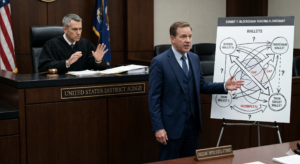
Why the $452M Restitution Order Keeps Elizabeth Holmes Broke

When Elizabeth Holmes was nine years old, she told relatives she wanted to be a billionaire. By her early thirties, she was the world’s youngest self-made female billionaire with a paper net worth topping $4.5 billion. That ambition ended badly in a San Jose federal courtroom. Following her wire fraud and conspiracy convictions, Judge Edward […]

Written by Leslie Sammis on October 20, 2026

Jurisdiction

In Rem Jurisdiction in Civil Asset Forfeiture Cases The Ninth Circuit’s decision in United States v. Nasri, No. 22-55685, 2026 U.S. App. LEXIS 27014 (9th Cir. Sept. 2, 2026) marks a major constitutional limit on federal civil asset forfeiture. By holding that the Fifth Amendment’s Due Process Clause bars federal courts from exercising in rem […]

Written by Leslie Sammis on September 3, 2026

Supplemental Petition

CBP’s Supplemental Petition Decision under 19 CFR § 171.62 When U.S. Customs and Border Protection (CBP) or Immigration and Customs Enforcement (ICE) seizes cash, cryptocurrency, vehicles, or commercial merchandise, property owners often begin by filing an administrative Petition for Relief under 19 CFR Part 171. If CBP denies your original petition or grants unsatisfactory relief […]

Written by Leslie Sammis on July 31, 2026

Bankruptcy Fraud

Forfeitures Involving Allegations of Bankruptcy Fraud When the government wants to seize property involved in bankruptcy fraud, it often uses the catch-all forfeiture provision in 18 U.S.C. § 981(a)(1)(C) which authorizes the forfeiture of the proceeds of criminal bankruptcy fraud in violation of 18 U.S.C. § 152. The most common scenario arises when a person files […]

Written by Leslie Sammis on July 26, 2026

Reforming Civil Asset Forfeiture Laws at the Federal Level

Civil asset forfeiture has long been one of the most controversial mechanisms in American law enforcement. Rooted in medieval maritime law, the practice allows the government to seize property—such as cash, vehicles, real estate, or valuables—suspected of being connected to criminal activity. Under civil forfeiture, the legal action is taken against the property itself (in […]

Written by Leslie Sammis on July 10, 2026

Attorneys

Meet The Attorneys Sammis Law Firm was founded in 2008 by Jason Sammis and Leslie Sammis. For the past 18 years, our main office has been located at 1005 N. Marion Street in downtown Tampa. Over the years, the firm has grown to six (6) attorneys, four paralegals, and an intake coordinator. We have additional […]

Written by Zane Miller on May 21, 2026

Examples of Government Overreach in Cryptocurrency Asset Forfeiture

To understand this problem with government overreach when seizing cryptocurrency, let’s look at a recent case decided on March 3, 2026, in the United States District Court for the Northern District of New York. Studying a specific case is often the best way to learn more about civil asset forfeiture cases involving cryptocurrency. In United […]

Written by Leslie Sammis on May 2, 2026

What to Do if Your Cryptocurrency is Frozen or Seized: A 5-Step Guide

What happens if Tether tells you that your USDT is blacklisted or frozen at the request of a federal law enforcement agency in the United States? In other cases, cryptocurrency might be frozen at an exchange like MEXC, Binance, or Coinbase, because the exchange was served with a seizure warrant issued by a law enforcement […]

Written by Leslie Sammis on February 25, 2026

Blockchain Law

Blockchain Law and Civil Asset Forfeiture “Blockchain law” refers to the emerging legal field addressing the legal, regulatory, and policy issues arising from the use of blockchain technology, digital assets (like cryptocurrencies and stablecoins), and smart contracts. For civil asset forfeiture attorneys, blockchain law has become an increasingly important area of practice as government agencies […]

Written by Leslie Sammis on December 22, 2025